Buck Creek was home to Indians and pioneers. The land at the
time of early settlement was mostly forested by large trees with
minimal undergrowth. Occasionally, the forests were interrupted by prairie openings.
In 1780, George Rogers Clark, a Revolutionary war hero, led a band of nearly 1,000 Kentuckians in a raid against Ohio
Indians. The Shawnee Indians abandoned their camp which they called Old Chillicothe (near Xenia) and fled to Piqua, the
Shawnee capital, located west of the present site of Springfield. Clark pursued the fleeing Indians, and the Shawnee were
defeated at the Battle of Piqua. Most of the Indians, however, had dispersed into the woodlands. One Indian hiding in the
woods was the young Tecumseh, who vowed to avenge the attack. Following the battle, Clark's men retreated to their homes
in Kentucky and the Indians moved north. A new Piqua was erected on the banks of the Miami River. This battle put a
temporary end to Indian warfare.
With the decline of Indian threat, settlers moved into the area. In
1799, legendary frontiersman Simon Kenton settled in the
region with six other Kentucky families. The group lived near the
confluence of Buck Creek and Mad River. After two years, the
settlers moved to different areas. Kenton established a home
along Buck Creek about four miles north of present Springfield.
Settlement brought change to the area as trees were cut to
construct buildings. Acres were cleared and farm crops were
planted. The settlers found the land extremely fertile.
The community of Springfield was founded in 1801 and has
served since then as the county seat of Clark County. In 1838, the
National Road (U.S. 40) reached Springfield and this opened
new markets for manufacturing and agriculture. Over the years,
Springfield's character changed from rural to industrial. By 1880, the community led the nation in the manufacturing of
agricultural implements.
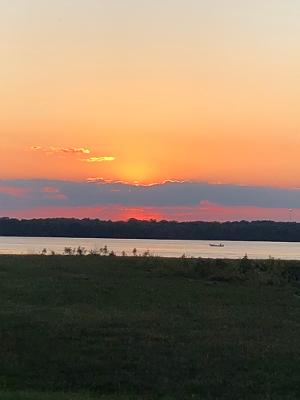
In September 1966, work was started by the U.S. Army Corps of Engineers to impound Buck Creek as a flood control project.
In 1974, the Clarence J. Brown Dam and Reservoir were dedicated and an agreement gave the Ohio Department of Natural
Resources the operation of much of the area. Buck Creek State Park was officially opened in June 1975.
- T Walker
Ohio does not have an annual pass and does not charge entrance fees to state parks.
This modern campground has 101 campsites of which 89 have electricity. Campground facilities include showers, flush toilets
and dump station. Campers with pets may camp on designated sites.
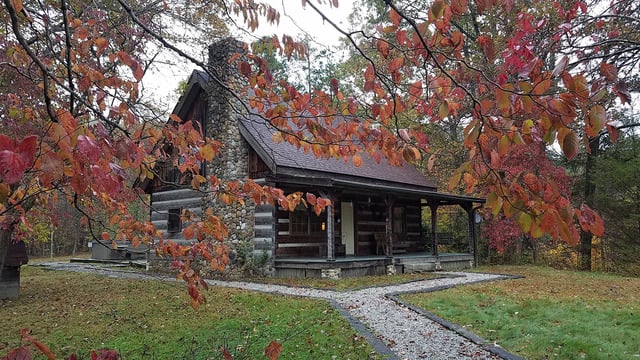
There are 26 family cottages situated in a wooded area with several offering a view of the lake. The cottages have two
bedrooms, bath with a shower, living room with a trundle bed, complete kitchen, dining area and screened porch.





 The park was very clean, the camp store host was very kind and informative. The restrooms were clean. The entrance to the park and campground was also beautiful.
  I came here often as a kid to stay with my family on Vacation. I have many fond memories. From eating Cake and Ice cram in the cabins, my first experience with a stall type shower. First time that I saw a stick bug or a oppossum, to just remembering walking the trails with Dad. Either way this place is great.
 Nice park but is loaded with Ticks on the hiking trails. Prepare yourself.




 Share Your Buck Creek State Park Photos (click here)